Tagging the Jobsite: RFID vs GPS vs BLE vs QR
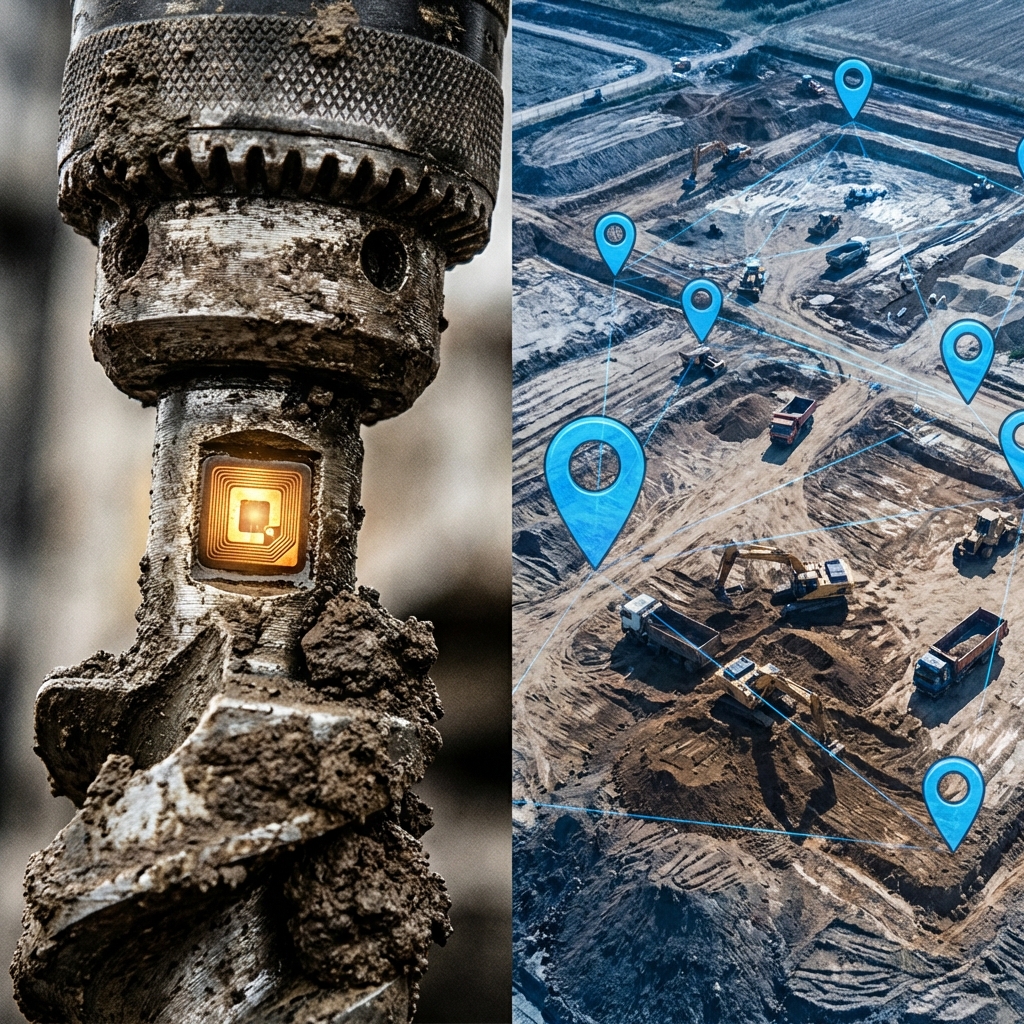
A no-nonsense buyer's guide. Why the industry is moving to a hybrid of QR tagging for accountability and RFID for speed.
Stop buying the same Hilti drill three times. Construction loses $1B annually to 'Ghost Assets'. We explore why GPS fails indoors and why the industry is moving to a hybrid of QR tagging and Passive RFID.
The Ghost Asset Crisis: A $2M Problem
The Ghost Asset crisis occurs when construction companies pay insurance and replacement costs for tools that no longer exist. Industry data reveals that up to 30% of assets listed on a balance sheet are 'ghosts' (lost, stolen, or broken) but never officially removed from the inventory.
Stop me if you've heard this one: A site manager rents three generators because nobody can find the two listed in the inventory. This is the 'Ghost Asset' phenomenon. Industry data suggests that 30% of assets listed on a construction company's balance sheet do not actually exist. They have been lost, stolen, or broken, but never written off.
"You are paying insurance premiums and personal property tax on drills that are currently rusting in a landfill.
The cost isn't just replacement value. It's the productivity encryption. When a crew of five electricians spends 40 minutes looking for a specific crimping tool, you have just burned 3.3 man-hours before the day has even started. On a 24-month mega-project, this friction accumulates into millions in lost operational efficiency.
The Hierarchy of Tracking Technologies
There is no single 'silver bullet' for jobsite tracking. The most effective strategy deploys a hierarchy of technologies: GPS for heavy machinery, Active BLE for high-value mobile equipment, and ultra-cheap Passive RFID and QR codes for individual hand tools.
There is no 'silver bullet'. A hammer does not need the same tracker as a crane. We classify tracking into four distinct tiers based on value and mobility:
| Tier | Asset Type | Best Technology | Cost/Tag | Pros |
|---|---|---|---|---|
| 1. Yellow Iron | Excavators, Cranes | GPS + Cellular | $200+ | Global visibility, usually hardwired |
| 2. High Value Mobile | Generators, Compressors | Active RFID / BLE | $20 - $50 | Real-time location on site map |
| 3. Hand Tools (Audit) | Drills, Saws, Grinders | Passive RFID | $0.30 - $1.00 | Scan 50 items in 5 seconds |
| 4. Hand Tools (ID) | Ladders, Batteries, PPE | QR Code | $0.01 | Universal scanning, zero hardware cost |
The First Line of Defense: QR Codes
QR codes serve as the mandatory first line of defense because they democratize tracking. Using the smartphone in every worker's pocket, specialized QR software enforces a digital 'Chain of Custody', creating a culture of accountability without requiring expensive proprietary scanning hardware.
QR Codes remain the most underrated technology in construction. They democratize asset tracking because every single worker has a scanner in their pocket (their smartphone). You do not need to buy expensive handheld readers to get started.
With a system like itemit, a QR code allows for an instant 'Chain of Custody' transfer. When John takes a drill, he scans it. The system logs: 'Drill #104 checked out to John at 07:00 AM'. When he returns it, he scans it again. If the drill is found on another floor, anyone can scan it to see who is responsible. It creates a culture of accountability that hardware alone cannot solve.
The Nuclear Option: Passive RFID
Passive RFID is the practical choice for bulk, audit-level visibility. When attached to hundreds of individual tools, an RFID sled allows a supervisor to instantly 'sweep' a tool crib or a work van in seconds, instantly identifying missing items through 'Audit-by-Exception'.
QR codes are great for one-by-one interaction, but they fail when you need to audit a van full of 100 tools. You cannot ask a supervisor to scan 100 QR codes every morning.
This is where Passive RFID shines. By sticking a durable UHF RFID tag (often paired with the QR code) on the tool, you can 'sweep' a van with a handheld reader in 10 seconds. The reader picks up every tag, even through plastic cases and drywall. This allows for 'Audit-by-Exception': The system tells you exactly what is *missing*, rather than you having to count what is there.
The Check-In / Check-Out Workflow (Hybrid)
The most robust jobsites implement a hybrid workflow. Workers check tools out using personal iPhone QR scans to establish undeniable accountability, while tool crib managers utilize Passive RFID sweeps for rapid end-of-day reconciliation to quickly identify what was not returned.
The most robust sites use a hybrid model: QR for the user, RFID for the crib manager.
Implementation Guide: The 90-Day Roadmap
A successful asset tracking rollout takes approximately 90 days. Month one focuses strictly on physically locating and cleansing legacy data. Month two involves the physical tagging and pairing of hardware. Month three is the 'soft launch' focusing exclusively on user adoption and workflow training.
Month 1: The Cleanse. Do not tag anything yet. Physically locate every asset. Write off the ghosts. Clean your data. Establish your naming conventions (e.g., 'DRILL-HAMMER-18V' vs '18V Hammer Drill').
Month 2: The Tagging Party. Order pre-printed QR/RFID hybrid tags. Metal assets need 'On-Metal' tags; plastic assets can use standard labels. Buy pizza. Get the apprentices involved. Tagging 2,000 tools takes a team effort, but it forces you to touch every asset.
Month 3: The 'Soft' Launch. Deploy the app to foremen only. Start with a single 'controlled' site or tool crib. Iron out the checkout process. Once the leadership sees the data visibility, roll it out to the wider workforce.
The Future: BIM AI and Predictive Logistics
Ideally, tracking data should feed directly into your BIM model. Knowing where materials are vs. where they should be allows for 'Just-in-Time' construction, reducing laydown space by 40%. This data flow becomes even more powerful when paired with Artificial Intelligence. AI agents can analyze movement patterns to predict bottlenecks before they happen, automatically reordering materials or alerting site managers to safety risks.
AI Asset Intelligence for Defense Contractors
AI asset intelligence for defense contractors: IUID compliance, mission-critical RFID, and audit-ready visibility on private networks. Book a scoped assessment.