From RFID to RWA: Tokenising Fine Wine
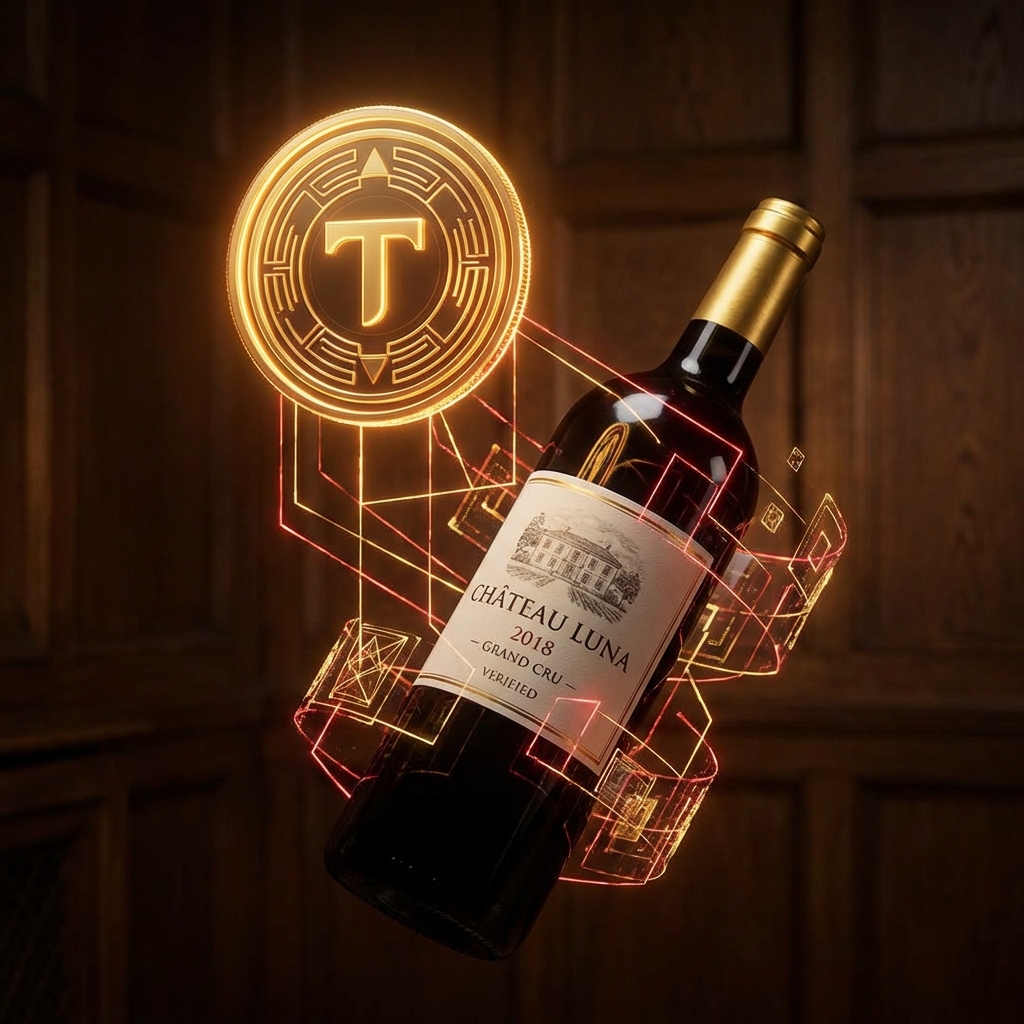
Exploring the dVin protocol and how connecting a physical bottle's history to a digital token unlocks liquidity and provenance for the $1T wine market.
Real World Asset (RWA) tokenization bridges physical goods to decentralized finance (DeFi). By linking a physical bottle of fine wine to an on-chain Non-Fungible Token (NFT) via cryptographic NFC or RFID tags, producers instantly eliminate fraud and open up a $1 trillion asset class to global, fractional liquidity.
For centuries, the fine wine market has operated as an opaque, high-friction gentleman's club. If a collector wants to sell a legendary 1945 Château Mouton Rothschild, the process involves shipping the physical bottle to an auction house, paying exorbitant verification and insurance fees, and waiting months for settlement. Furthermore, every time the bottle physically moves, the risk of 'cork taint', temperature damage, or outright counterfeiting increases.
Web3 promises to solve this through the tokenization of Real World Assets (RWAs). The concept is elegantly simple: issue a digital token (an NFT) that legally represents the physical bottle. The physical bottle remains safely secured in a temperature-controlled, bonded warehouse in Bordeaux, while the digital token is traded freely and instantly on global crypto exchanges.
How does the dVin Protocol tokenize physical wine?
The dVin Protocol forces a physical-to-digital handshake. Wineries embed cryptographic NFC chips into the bottle's capsule. When scanned, this chip mints a 'Digital Cork' NFT on the blockchain, confirming the bottle's origin, vintage, and ownership history permanently.
The critical failure point of early RWA tokenization was the 'oracle problem': how do you prove the digital token actually maps to the physical asset? If someone drinks the wine, how does the blockchain know the token is now worthless?
Specialized protocols like dVin solve this using 'phygital' (physical + digital) hardware. During the bottling process, the winery applies an anti-tamper NFC (Near Field Communication) tag over the cork. This tag contains a secure cryptographic enclave.
When a consumer or merchant taps their smartphone against the tag, two things happen. First, the phone verifies the cryptographic signature generated by the chip, proving it was encoded by the specific winery (eliminating counterfeits). Second, it interacts with a smart contract to mint or transfer the 'Digital Cork' NFT to the user's wallet.
What happens to the NFT when the wine is consumed?
To prevent fraud, the physical NFC tag contains a tamper-evident loop. When the bottle is opened, the tag is physically broken, triggering a smart contract that 'burns' the original asset token and mints a 'Tasting Token' to prove the experience.
The genius of the anti-tamper NFC tag is its physical destruction. The tag spans the cork and the glass neck. When the bottle is opened, the internal antenna loop is severed.
The next time the bottle is scanned, the chip detects the broken loop. It sends a 'consumed' status to the blockchain. The smart contract instantly 'burns' (destroys) the high-value tradable asset token. In its place, it mints a non-tradable 'Tasting Token' (a POAP - Proof of Attendance Protocol) into the consumer's wallet, granting them direct loyalty access to the winery.
This physical-to-digital destruction mechanism permanently removes the risk of empty bottles being refilled with cheap wine and sold on the secondary market.
RFID Tracking & Intelligence
Enterprise RFID asset tracking solutions: fixed portals, handheld bulk scans, cloud middleware, and WMS/ERP integration for 99%+ inventory accuracy.